
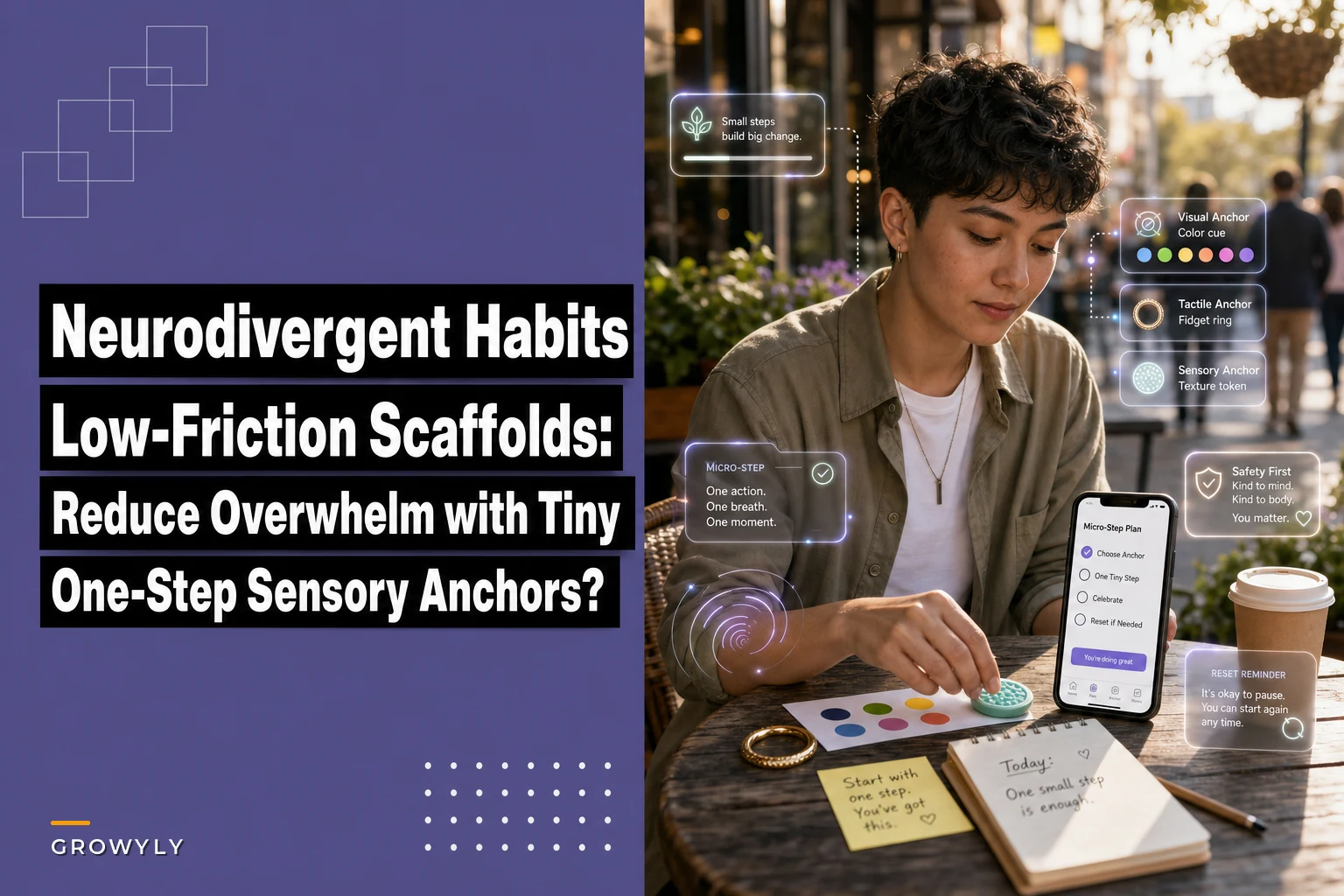

Most habit advice assumes your brain works like a reliable machine—input goal, execute task, repeat tomorrow. Neurodivergent brains don't work that way. Executive dysfunction means the gap between intention and action can feel enormous, and traditional habit strategies pile on more cognitive load when you're already maxed out.
The real problem isn't motivation or discipline. Standard habit templates demand executive function resources you don't consistently have. When your working memory randomly dumps information, when task initiation feels like moving a boulder, when time blindness makes "do this at 2pm" completely meaningless—you need different tools.
Having built operational systems for businesses dealing with inconsistent workflows and unreliable processes, I've noticed real parallels to ADHD habit strategies. Both need scaffolding that works even when the primary system fails. The same low-friction approaches that keep business operations running when staff forget steps or systems glitch can genuinely transform personal habits for neurodivergent minds.
Visual Anchors: External Memory That Doesn't Rely on Remembering
Your phone alarm goes off. "Take vitamins," it says. You swipe it away, planning to do it after this one thing. Three hours later, vitamins forgotten, cycle repeats.
Digital reminders fail because they require you to hold the task in working memory while transitioning to action. That's exactly where ADHD brains struggle most. Visual anchors bypass this weakness entirely—they're not just reminders, they're environmental modifications that make the next action obvious and nearly effortless. Physical breadcrumbs that guide you through habits without requiring memory or decisions.
The Toothbrush Medicine System
Place your medication directly behind your toothbrush. Not next to it, not in the nearby cabinet—physically blocking your toothbrush. This creates an unavoidable visual cue at a moment when you're already in a routine.
It works because you're hijacking an existing habit rather than building a new one from scratch. The medication becomes part of a physical sequence, not a separate decision point.
A small therapy practice owner discovered this principle almost by accident. She kept missing client note reviews despite calendar alerts everywhere. The fix was brutally simple—print the notes and place them on her keyboard each evening. Morning coffee required moving the papers. That unavoidable interaction worked where alerts had failed for months.
Color-Coded Zones for Task Transitions
Neurodivergent brains often struggle with transitions between different types of tasks. Creating distinct visual zones using colored tape, different lighting, or even designated blankets for different activities gives your brain a shortcut.
-
Red zone (kitchen counter section)
Morning routine items only
-
Blue zone (desk area)
Deep work materials
-
Green zone (couch corner)
Wind-down activities
The colors aren't purely organizational—they're state triggers. Your brain starts associating the visual cue with the mental mode needed for that activity, which reduces the cognitive load of switching.
The Two-Item Rule for Visual Anchors
More than two visual anchors in one space creates noise that defeats the purpose. If everything is marked important, nothing stands out. Limit yourself to two primary anchors per room.
-
Bathroom
Medication behind toothbrush, workout clothes on doorknob
-
Kitchen
Water bottle on coffee maker, vitamins on plate
-
Workspace
Timer on monitor, break snack pre-portioned on desk
When businesses implement visual management systems, the same principle holds—too many safety signs become wallpaper. Two critical warnings actually get noticed.
Ultra-Short Commitments: The Two-Minute Maximum
Task Decomposition That Actually Helps
Achieve more by focusing on what matters.
Growyly helps you build lasting habits and track your personal growth effortlessly.
- Goal setting with progress tracking
- Daily habit reminders
- Motivational insights and analytics
No credit card required
Standard advice says break tasks into smaller pieces. But "organize closet" broken into "sort clothes" and "arrange by color" still feels overwhelming. Real ADHD habit strategies need absurdly small chunks.
Instead of "exercise for 20 minutes," try:
-
Put on one shoe (complete task)
-
Put on other shoe (complete task)
-
Walk to end of driveway (complete task)
-
If continuing feels okay, walk to corner (optional bonus)
Each step is genuinely complete on its own. No hidden agenda, no "real" goal you're failing if you stop. Some days you'll just put on shoes. That still maintains the habit pathway in your brain, and that matters more than people realize.
The Momentum Map Method
Create a physical or digital map showing micro-tasks as connected dots. Complete one, mark it. The visual progress creates the dopamine hits ADHD brains need to keep going.
-
Dot 1
Open book
-
Dot 2
Read one sentence
-
Dot 3
Read one paragraph
-
Dot 4
Read one page
-
Dot 5
Read one chapter section
You can stop at any dot. The map shows progress regardless of where you end, which cuts through the all-or-nothing thinking that wrecks habits over time.
A dental office struggling with inconsistent sterilization protocols used something similar—broke the process into twelve micro-steps, each under 90 seconds. Completion rates climbed from around 60% to over 95% because staff could maintain progress even during interruptions.
Permission to Stop Structure
Build explicit stop points into every habit. This isn't giving yourself an out—it's creating sustainable practices that don't eventually trigger burnout or resistance.
Morning routine with stop points:
-
Make bed OR just straighten covers (stop point)
-
Full breakfast OR just grab protein bar (stop point)
-
Complete workout OR just stretching routine (stop point)
-
Shower and full grooming OR just face wash and deodorant (stop point)
Having predetermined minimum viable versions removes decision fatigue. Choosing the shorter option isn't failure—it's succeeding within the framework you built.
Here's a simple visual workflow you can use to map momentum and stop points.
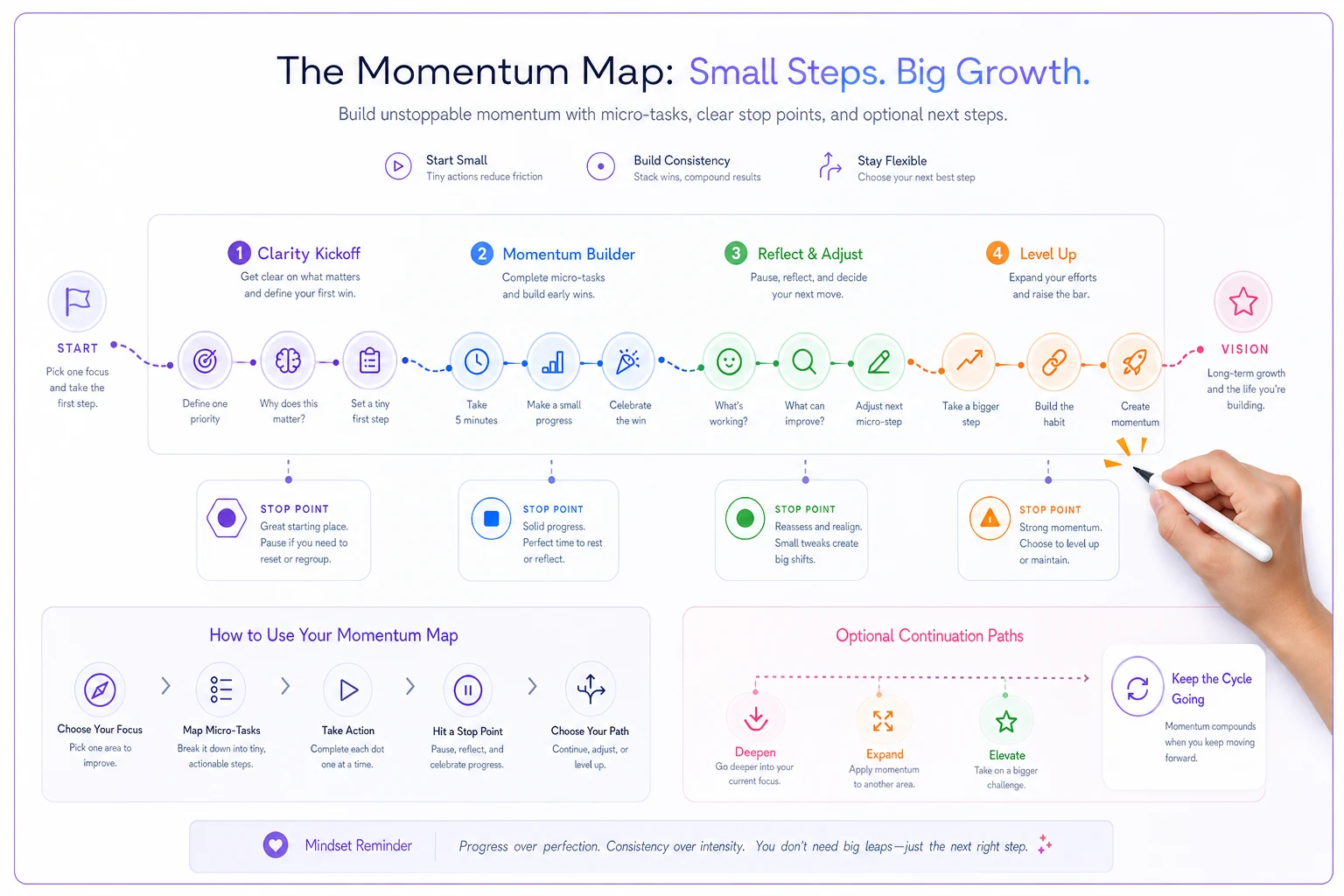
Use this kind of map where a single completed dot is a meaningful win.
Sensory Cues: Body-Based Triggers That Bypass Executive Function
When your brain struggles with time awareness and task initiation, sensory cues create immediate, visceral prompts that don't require cognitive processing. They engage different neural pathways than traditional reminders do.
Temperature Transitions as Habit Triggers
Temperature changes create unmistakable sensory experiences that can anchor habits better than any alarm.
-
Cold water face splash → transition to focused work
-
Warm compress on neck → begin wind-down routine
-
Ice cube in mouth → reset from hyperfocus
-
Hot shower → day segment transition
A software developer with severe ADHD maintains focus blocks using temperature. Every 45 minutes, she runs cold water over her wrists for 10 seconds. It's a physical reset her brain can't ignore or dismiss like another notification.
Texture Anchoring for State Changes
Different textures signal different activity modes to your nervous system. Works especially well for neurodivergent individuals who are sensory-seeking or have strong texture preferences.
-
Fuzzy blanket = creative brainstorming time
-
Smooth stress ball = phone call preparation
-
Rough towel on chair = deep work session
-
Soft hoodie = transition to rest
Consistency is the whole game here. Use the same texture for the same purpose until the association becomes automatic.
Scent Bridges for Routine Segments
Scent connects directly to memory and emotion centers in the brain, bypassing conscious thought. Distinct scents can mark routine transitions more reliably than most people expect.
-
Peppermint oil on wrists when alarm goes off
-
Citrus candle during breakfast
-
Lavender spray before starting work
-
Eucalyptus diffuser during afternoon focus time
Keep scents simple and distinct. Too many overlapping fragrances create confusion rather than clarity.
Low-Burden Tracking: Measurement Without Overwhelm
Traditional habit trackers become another source of shame when you forget to update them for a week. ADHD habit strategies need tracking methods that capture progress without adding administrative burden.
The Single Dot System
Forget detailed tracking apps. Use a physical calendar and make a single dot each day you do any version of the habit. Not a checkmark (implies completion), not an X (implies failure)—just a neutral dot.
-
No decision about how much counts
-
No shame about partial completion
-
Visual pattern emerges over time
-
Takes literally two seconds
After a month, you see patterns without having logged detailed data. Clusters of dots show when habits stick. Gaps show when life interferes. No judgment, just information.
Artifact Tracking
Instead of recording that you exercised, let natural artifacts do the tracking. This eliminates the logging step entirely while still maintaining awareness.
-
Put used workout clothes in a specific basket (visual count of sessions)
-
Move a rubber band from left wrist to right after taking medication
-
Stack finished books on a designated shelf
-
Save one bottle cap from each day's water consumption
The artifacts become the record. No apps, no journals, no additional executive function required.
Place the dot calendar where you'll see it during your routine, like the bathroom mirror.
The Weekly Snapshot Method
Instead of daily tracking, take a weekly photo of relevant spaces or items. Creates a visual record without daily maintenance.
-
Photo of medication bottle showing remaining pills
-
Image of workout clothes basket
-
Snapshot of desk at week's end
-
Picture of meal prep containers
These snapshots capture the reality of your habits without requiring perfect daily recording. Review monthly to spot patterns—but don't analyze daily. That's just another task to avoid.
Referral-Aware Language: Words That Reduce Resistance
The language you use internally about habits either creates resistance or reduces it. Neurodivergent brains often carry strong rejection sensitivity and perfectionism that standard habit language triggers without you even noticing.
Replacing Commitment Language
Shifting from obligation to experimentation reduces the emotional weight that triggers avoidance.
| Instead of... | Try... |
|---|---|
| "I need to exercise every day" | "I'm experimenting with movement" |
| "I failed to meditate this morning" | "Meditation didn't happen this morning" |
| "I have to stick to this routine" | "I'm testing this routine for fit" |
Progress Framing That Acknowledges Reality
Standard habit advice celebrates streaks and consistency. For ADHD minds, this creates an all-or-nothing trap where one missed day destroys motivation.
-
Frequency
"3 times this week" instead of "missed 4 days"
-
Direction
"More than last week" instead of "still not daily"
-
Recovery
"Restarted quickly" instead of "broke the streak"
A small marketing agency owner struggled with consistent email checking, which was frustrating clients. Instead of forcing inbox zero, she reframed to "email touches"—any interaction counted. Opening the inbox counted. Responding to one message counted. That language shift reduced enough resistance that she naturally started processing more messages over time.
The "Minimum Viable" Prefix
Add "minimum viable" before any habit description. It immediately signals that partial completion is acceptable and expected.
-
Minimum viable exercise
Put on shoes
-
Minimum viable meditation
Three breaths
-
Minimum viable journaling
One sentence
-
Minimum viable meal prep
Cut one vegetable
The word "viable" matters—it implies the smaller version is legitimately valuable, not a consolation prize.
The Modification Menu: Common Habits Redesigned
Below are common habit templates rebuilt with these modifications integrated. Not theoretical—based on what actually holds up when executive function is unreliable.
Morning Routine for Variable Energy
Traditional version: Wake at 6am, exercise, shower, breakfast, start work by 8am
ADHD-modified version:
Visual anchors:
-
Workout clothes on bathroom door
-
Breakfast items in single basket on counter
-
Work materials in launch pad by door
Ultra-short commitments:
-
Feet on floor (complete)
-
Bathroom visit (complete)
-
Put on workout clothes OR regular clothes (choice point)
-
Five jumping jacks OR walk to mailbox OR skip (choice point)
-
Full shower OR face wash (choice point)
-
Prepared breakfast OR protein bar (choice point)
Sensory cues:
-
Bright bathroom light triggers wake-up
-
Cold water on face marks exercise decision point
-
Specific playlist for morning tasks (same every day)
Tracking:
-
Single dot on bathroom mirror calendar
-
Move morning marker from "sleep" to "awake" position
Language:
-
"Morning experiment in progress"
-
"Minimum viable morning achieved"
Focus Work Sessions
Traditional version: 90-minute deep work blocks with 10-minute breaks
ADHD-modified version:
Visual anchors:
-
Timer physically on desk (not phone)
-
"Focus mode" card standing on monitor
-
Snack and water pre-positioned
Ultra-short commitments:
-
Clear one item from desk (complete)
-
Open main work application (complete)
-
Work for one minute (complete)
-
Continue for five minutes if flowing (optional)
-
Continue for 15 minutes if still flowing (optional)
Sensory cues:
-
Specific work hoodie or shawl
-
Focus scent in diffuser
-
Textured seat cushion for work mode
-
White noise or brown noise background
Tracking:
-
Tally marks on paper for each "start" (not duration)
-
Weekly photo of tally paper
Language:
-
"Focus experiment"
-
"Work touches"
-
"Progress pulses"
Evening Wind-Down
Traditional version: No screens after 9pm, read for 30 minutes, meditate, sleep by 10:30pm
ADHD-modified version:
Visual anchors:
-
Phone charging station in kitchen (not bedroom)
-
Book placed on pillow during morning routine
-
Sleep clothes laid out on bed
Ultra-short commitments:
-
Phone in charging station (complete)
-
Change one piece of clothing to sleepwear (complete)
-
Sit on bed (complete)
-
Open book OR just hold it (choice point)
-
Read one page OR just look at pictures (choice point)
-
Lie down with eyes closed for 30 seconds (complete)
Sensory cues:
-
Dim warm lighting after dinner
-
Lavender pillow spray
-
Weighted blanket for transition
-
Cool temperature in bedroom
Tracking:
-
Sleep clothes in specific hamper (visual count)
-
Bookmark movement in book (natural progress)
Language:
-
"Experimenting with evening downshift"
-
"Minimum viable wind-down"
"Experimenting with evening downshift" "Minimum viable wind-down"
Integration With Digital Tools and AI Support
Physical scaffolds do the heavy lifting, but AI-powered tools can add dynamic support that adapts to your actual patterns. The key is using them to supplement physical systems, not replace them.
AI automation in habit apps can catch patterns humans miss—like how your habit completion drops on rainy days, or spikes after a decent night of sleep. That kind of insight helps you set realistic expectations instead of constantly fighting your natural rhythms.
Smart notifications that learn your actual response patterns work better than fixed reminders. If you consistently dismiss 2pm medication alerts but actually respond to 2:45pm ones, the system adjusts. Less notification fatigue, more effective prompting.
Some operational software platforms now weave habit scaffolding into work systems. A project management tool might notice you do focused work best between 10am and noon, automatically protecting that window and routing communications elsewhere. That removes the constant burden of defending your peak hours from everyone else's calendar invites.
The integration that matters most isn't technical complexity—it's matching support to actual behavior patterns rather than ideal ones. A simple AI that texts "glasses of water today?" at semi-random times might outperform an elaborate tracking system you abandon after two weeks.
Real-World Adjustments and Troubleshooting
Even with solid scaffolding, life happens. ADHD habit strategies need built-in flex points for when executive function completely drops out or hyperfocus takes over.
The Hyperfocus Override Protocol
When hyperfocus kicks in, habits disappear. Instead of fighting it, build interrupt protocols:
-
Set multiple sensory alarms (vibration + sound + light)
-
Use automatic environmental changes (smart lights that dim at a set time)
-
Enlist external interrupts (friend who texts, family member who knocks)
-
Pre-position critical items in your hyperfocus path (medication on keyboard, water bottle on mouse pad)
The Crash Day Minimum
Some days executive function just doesn't show up. Predetermined crash day minimums remove decision burden when you're already running on empty.
-
Medication
Just take morning dose
-
Hygiene
Just brush teeth
-
Food
Just eat anything with protein
-
Movement
Just stand up three times
-
Work
Just check email subject lines
These aren't failures. They're intentional adaptations that maintain habit threads without overwhelming a depleted system.
The Momentum Restart Sequence
After any disruption—illness, travel, a rough week—use a specific restart sequence instead of jumping back to full habits:
-
Days 1–3
Just one visual anchor interaction
-
Days 4–6
Add one ultra-short commitment
-
Days 7–9
Include one sensory cue
-
Day 10 onward
Begin combining elements
Graduated re-entry prevents the overwhelm that usually causes complete habit abandonment after disruptions. Most people try to return to full routine immediately after a rough patch—that almost always fails.
Making It Sustainable Long-Term
ADHD habit strategies aren't about reaching neurotypical consistency—they're about creating sustainable patterns that work with your brain's variability. Progress over perfection, function over form.
Review your scaffolding monthly, but only adjust one element at a time. Multiple simultaneous changes overload executive function and make it impossible to figure out what's actually working. Small iterations based on real patterns beat dramatic overhauls every time.
Seasonal changes, medication adjustments, stress levels, hormonal shifts—all of these affect executive function. Your habits need enough flexibility to absorb these changes without collapsing entirely. The scaffolding should support you through variation, not demand consistency your brain can't reliably deliver.
Companies that build rigid operational systems fail during market changes. Those with flexible, adaptive frameworks survive. Your habit system needs that same quality—resilience over rigidity.
Success with neurodivergent habit building isn't about finding the perfect system. It's about building scaffolding robust enough to work even when your brain doesn't. Visual anchors, ultra-short commitments, sensory cues, and low-burden tracking create an external executive function that operates regardless of internal variability. When you build systems that work with your brain's patterns instead of against them, habits become possible even when executive function feels impossible.
Ready to unlock your full potential?
Join thousands of users transforming their lives using Growyly to stay motivated, organized, and growth-focused every day.